
Why Real Photographs Beat AI-Generated Images for Restaurants, E-Commerce, and Hospitality Brands
The internet is flooded with perfect food. Impossibly golden fries. Hotel rooms with no wrinkles on the bedsheets. Product shots with lighting that no studio could replicate. And increasingly, customers are calling it out.
The rise of AI-generated imagery promised to revolutionise commercial photography, cheaper, faster, infinitely scalable. And while the technology is genuinely impressive, a clear and measurable shift is happening in the market. Brands that replaced real photography with AI-generated visuals are losing customer trust. Restaurants are getting bad reviews before a single dish is served. Hotels are dealing with guests who feel misled before they check in. And e-commerce businesses are watching return rates climb.
This is the story of why authenticity has become the most powerful competitive advantage in visual content, and why real photography is not just a creative choice, but a business decision.
The Numbers Don't Lie: Consumers Want to See What's Real
Let's start with the data, because the evidence is significant.
A Getty Images study surveying over 30,000 adults across 25 countries found that 98% of consumers agree that authentic images and videos are pivotal in establishing trust. Almost 90% said they want to know whether an image has been created using AI. And 78% of consumers agreed that AI-generated images cannot be considered "authentic" regardless of how realistic they look.
A McKinsey Consumer Insights report from 2024 found that 67% of shoppers could identify AI-generated product images when shown side-by-side comparisons, and 58% reported less confidence in purchasing products that appeared "synthetic."
Bazaarvoice research found that two-thirds of shoppers prefer real customer photos from brands on social media over professionally staged shots and among 18-34 year olds, that preference climbs to 73%.
And in a 2026 Bazaarvoice survey of over 2,000 global consumers, 92% of shoppers said it is important to see reviews and photos from real, verified purchasers before making a purchase decision.
These are not small numbers. These are the majority of the people scrolling through your Instagram, looking at your menu on Zomato, or deciding whether to book your hotel on a travel platform. And the majority of them want to see what is real.
The Restaurant Problem: When the Photo Lies, the Review Follows
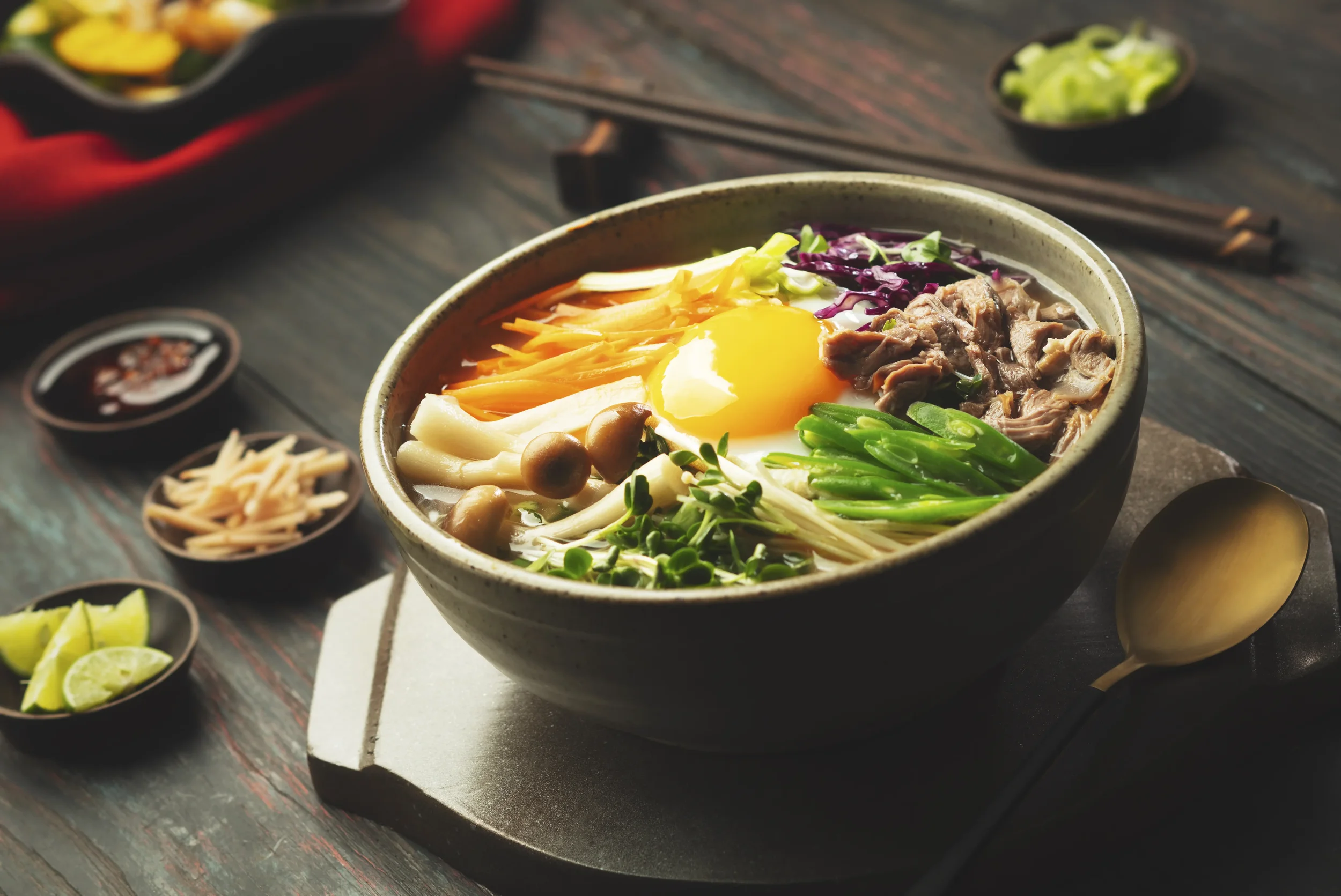
Bibimbap shot by Siddhesh Sawant - North Light Studio
For restaurants, the stakes around visual authenticity are uniquely high. A customer decides to visit or order based on what they see online. If the photo on your menu shows a dish that bears no resemblance to what arrives at the table, the gap between expectation and reality becomes your review.
A 2026 report from food delivery platform research highlighted a growing trust crisis in food photos specifically. Customers have become increasingly savvy at spotting AI-generated food imagery. And once they suspect it, the assumption immediately shifts: "They're hiding how bad the food really looks."
Oxford University research showed that AI-generated food images consistently make food appear more energy-dense than it actually is. More sauce, bigger portions, more toppings. One researcher warned this could "foster unrealistic expectations about food among consumers." For a restaurant, that is not a visual problem. That is an operations problem, a review problem, and a refund problem.
The delivery platforms have noticed. DoorDash permanently banned a user in December 2025 for using AI-generated photos to fake proof of delivery, signaling how seriously major platforms are treating AI manipulation in their ecosystems. Consumer protection laws around false advertising already apply broadly to food imagery, even in the absence of specific regulation. If a customer can argue that your menu photo materially misrepresents what they received, you face real consequences.
The irony is this: real food photography, done well, is more persuasive than any AI image. Studies show that high-quality food images result in 70% more orders and 65% higher sales compared to restaurants that use no images at all. The opportunity is not to fake better food, it is to photograph your actual food in a way that makes someone reach for their phone and place an order.
What builds that trust? Steam that rises from an actual dish. The slightly imperfect edge on a handmade flatbread. The specific colour of your restaurant's lighting reflected in a glass of craft beer. These details are unique to you. They cannot be generated, only captured.
The E-Commerce Reality: Authenticity Converts Better
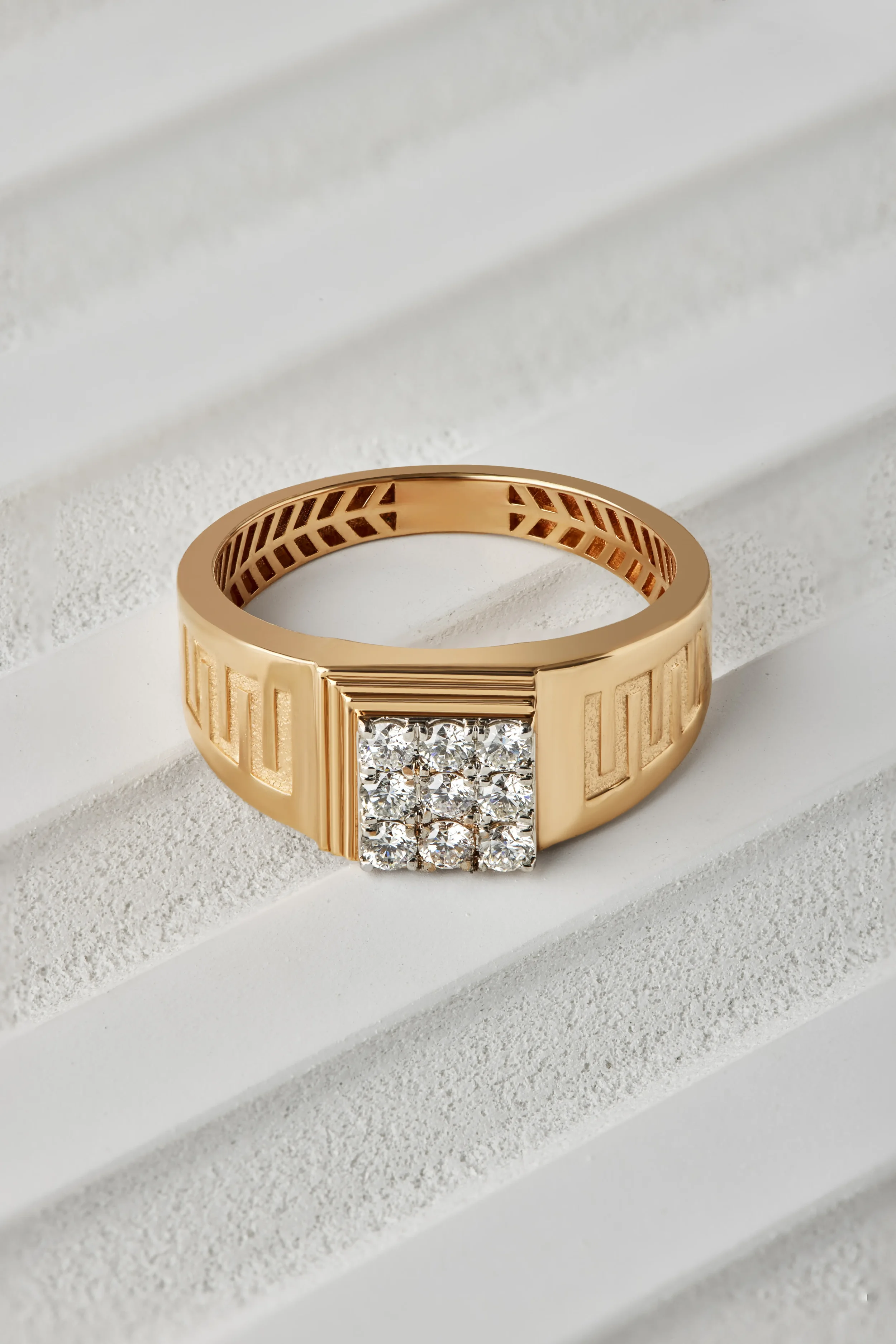
Jewellery shot for Anantam Jewels by Siddhesh Sawant - North Light Studio
E-commerce is where the AI photography debate has been loudest, and for good reason. AI tools that generate product backgrounds, swap models, create lifestyle settings, and produce hundreds of variations in minutes have genuinely changed what is possible at scale. Retailers like Zalando have used AI-generated imagery for a significant portion of their editorial visuals, citing dramatic reductions in cost and production time.
But the conversion data tells a more nuanced story.
High-resolution real product photos yield a 94% higher conversion rate than low-resolution alternatives. A Gartner survey found that 54% of shoppers are concerned that AI-generated imagery may misrepresent product fit or quality. And in premium categories specifically fashion, jewellery, skincare, F&B, the failure modes of AI are the most commercially damaging.
Zara's fashion team, after extensive testing of AI-generated imagery, concluded that while the technology works for basic catalogue items, it consistently fails to represent premium fabrics, intricate stitching, and the three-dimensional quality that justifies higher price points. A ₹400 shirt photographed with AI looks like a ₹40 shirt photographed with AI. The camera cannot lie but AI can fabricate, and customers sense the difference even when they cannot articulate it.
There is also the matter of Amazon's AI-based image scanning system, which now actively checks for hallucinated product details an extra pocket, altered label text, slightly different proportions. A suppressed listing is no longer just a poor-looking photo. It is lost revenue.
What works in e-commerce is exactly what has always worked: a photograph that accurately represents the product, shot with enough skill and intention that the customer feels confident they know what they are buying. That photograph can be enhanced in post-production. It can be colour-corrected, cropped, styled. But it has to start with something real.
The Hospitality Sector: Where Authenticity Is Everything
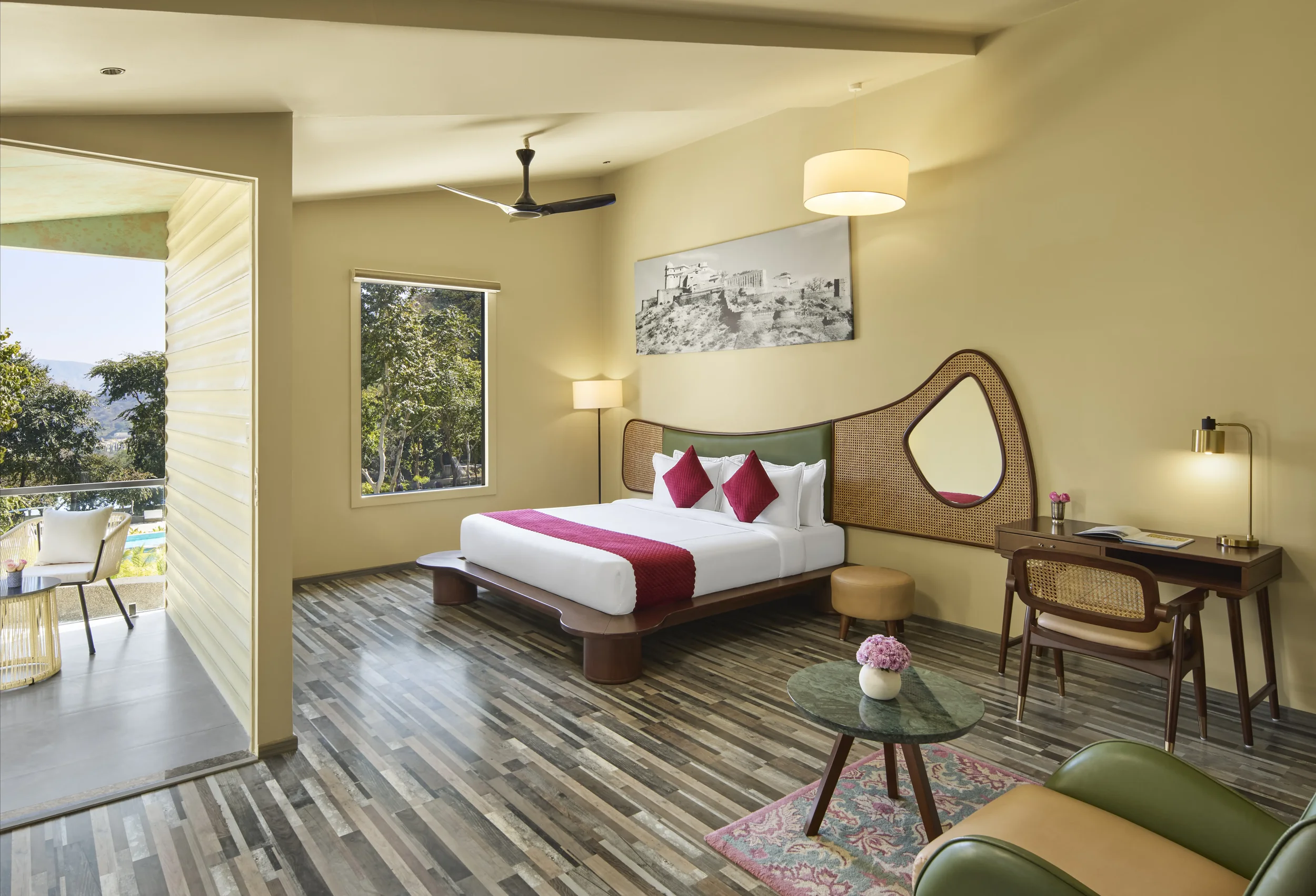
Cottage Bedroom shot for Treat Aranya Resort, Kumbhalgarh by Siddhesh Sawant - North Light Studio
For hotels, resorts, boutique stays, and hospitality brands, the visual stakes are arguably the highest of any industry. A guest books based entirely on what they see online. They have not touched the towels. They have not heard the ambient sound of the pool. They have not felt the quality of the mattress. All they have is photographs. And if those photographs misrepresent the space even subtly the mismatch lands in your reviews.
A 2025 ScienceDirect study using a mixed-methods approach specifically investigated consumer preferences for hospitality marketing imagery. The conclusion was unambiguous: consumers prefer hospitality services advertised with real images rather than those featuring AI-generated images. This held true across categories, with the effect particularly strong in what researchers called "high-involvement" and "hedonic" services which is precisely what most hospitality experiences are.
H&M's experience is instructive. The global fashion brand initially embraced AI model generation for their campaigns and then faced significant customer backlash, ultimately returning to human photography for "authentic" campaigns. Gartner research found that 54% of shoppers across industries are concerned that AI-generated imagery may misrepresent product quality, with consumers over 45 showing the strongest preference for traditional photography. For the hospitality sector, where the typical guest skews older and the booking decision involves considerably more money than an online impulse purchase, this is not a statistic to ignore.
The 2026 Hospitality Visual Playbook put it well: the challenge for hospitality brands is not whether to use AI it is where, when, and why. And the consensus from practitioners is clear: AI has a role in pre-opening phases, in rendering spaces that do not yet exist, in creating creative treatments that would otherwise require expensive CGI. But for the primary gallery images that a guest sees when they make a booking decision, real photography is non-negotiable.
There is also the matter of what real photography communicates that AI cannot. A pair of sunglasses left on a poolside table. A coffee cup beside a window with the morning light. These are not imperfections — they are signs of life. They tell the guest that this is a real place, with real people in it, and that the experience they are imagining is actually available to them. An AI-generated image of a hotel pool is a rendering. A real photograph of that same pool is a promise.
The Social Media Dimension: Authentic Content Performs Better
The shift toward authenticity in visual content has been especially pronounced on social media, where algorithmic and audience preference increasingly rewards the real over the polished.
Instagram, which shifted to a 3:4 grid format in late 2025, now uses image quality as a ranking signal but quality in this context does not mean perfect. It means high-resolution, well-lit, and visually genuine. Behind-the-scenes content a chef plating a dish, a barista pulling a shot, a product being assembled consistently outperforms studio-polished images because it feels real. Bazaarvoice's research found that user-generated content and real customer photos drive more engagement than staged marketing photography across almost every category.
This creates a specific opportunity for food, restaurant, and hospitality brands. A real photograph of your signature dish, shot with professional lighting and composition at your actual location, does something that no AI image can do: it shows your specific food, in your specific space, in the visual language of your specific brand. That combination of specificity is what builds a feed identity, drives saves and shares, and converts browsers into customers.
The brands doing this best are not choosing between authenticity and quality. They are achieving both by investing in real photography that is also expertly shot.
The Trust Equation: Why This Matters More Than Ever
The broader context for all of this is a moment of significant consumer scepticism. People are more alert to manipulation than at any point in the digital era. The proliferation of AI-generated content images, text, video, audio has created a kind of vigilance that did not exist five years ago. Consumers are not always able to identify AI-generated images accurately, but they are increasingly suspicious, and that suspicion alone changes the purchasing relationship.
Clutch's 2025 research found that 95% of consumers express some level of concern about the use of AI-generated images by brands. Even when they cannot spot the difference, the doubt lingers. And for categories where trust is foundational food, hospitality, healthcare, financial services that doubt has commercial consequences.
There is a "restaurant caught using fake photos" story waiting to happen for every brand that chooses AI over authenticity. And when it happens, the story is no longer about the food. It is about the deception.
What the Best Brands Are Doing Instead
The most successful restaurants, e-commerce brands, and hospitality businesses in 2025 and 2026 are not rejecting AI entirely. They are using it where it genuinely helps batch editing, background enhancement, consistent colour grading, volume production of catalogue images while investing in real, professional photography for the work that actually builds the brand.
The visual hierarchy looks something like this:
Hero images: the first photograph a potential customer sees of your food, your space, your product should always be real. This is the image that creates the first impression, carries the most emotional weight, and does the most commercial work. It deserves to be shot properly.
Supporting content: behind-the-scenes, day-to-day social content, stories, menu updates can be handled with a combination of real photography at various quality levels and judicious AI enhancement.
Catalogue and volume content: multiple product SKUs, menu repetitions, variations is where AI tools earn their place, particularly when the base photograph is real and the AI is used to optimise rather than fabricate.
The principle underneath all of this is simple: start with something real, and make it look as good as it actually is.That is not a limitation. It is the competitive advantage.
The Practical Case for Investing in Real Photography
For a restaurant owner reading this, the argument often comes down to cost. Professional photography takes time. It requires a photographer, a styled setup, a shoot day. But the return on that investment is a set of images that your brand owns, that accurately represent your food, that build genuine desire in the people who see them, and that cannot be called out as fake.
For a hospitality brand, the investment in real photography is insurance against the most expensive outcome in the industry: a guest who arrives expecting the photographs and finds something else. The gap between the image and the reality is the gap between a five-star review and a one-star review.
For an e-commerce business, real photography is the foundation of conversion. It is what allows a customer to say "I know what I'm getting" — and proceed to checkout.
The data, the consumer behaviour, and the commercial outcomes all point in the same direction. In a world where AI-generated images are everywhere, the brands that choose authenticity are the ones that stand out. The data, the consumer behaviour, and the commercial outcomes all point in the same direction. In a world where AI-generated images are everywhere, the brands that choose authenticity are the ones that stand out.
Real photographs are not the alternative to AI. They are the advantage.
North Light Studio is a Mumbai-based commercial photography and videography studio specialising in food, product, interior, and lifestyle photography. We create intentional, brand-specific visuals for restaurants, hospitality brands, and e-commerce businesses that want to build genuine trust with their audience. To discuss your next shoot, write to us at siddhesh@northlightstudio.in or visit northlightstudio.in.
Tags: food photography Mumbai, commercial photographer Mumbai, restaurant photography, product photography India, hospitality photography, real photography vs AI, authentic brand visuals, food photography for restaurants, e-commerce product photography, North Light Studio